
Solving Disengagement and Burnout: Why Wellness Programs Aren’t Enough
Employee burnout is at a crisis point. 61% of HR leaders say mental health leave has increased in the past year, and the usual fixes aren’t working. Free wellness apps, EAPs, and mental health days can’t solve the problem because burnout isn’t a wellness issue. It’s a work design issue.
Key takeaways
Burnout is a work design problem, not a wellness problem. Benefits packages can’t fix a structural issue.
Most employees start motivated. The workplace is what breaks that down over time.
Unclear priorities, fragmented attention, and unproductive manager relationships are the top drivers of disengagement.
Younger workers are increasingly turning to AI for support that should be coming from their manager.
The manager relationship is the single biggest lever for improving motivation and preventing burnout.
Behavioral insights give managers a science-backed foundation for understanding what drives each person before disengagement becomes a pattern.
Our recent Motivation at Work survey finds that only 16% of employees say their work feels regularly meaningful. When meaning breaks down at that scale, no benefits package fixes it. The problem is structural, rooted in how work is designed and how managers lead. That’s also where the fix has to start.
Why employees lose motivation at work
Our study found that a majority of employees (78%) started their current role motivated, but most (72%) aren’t anymore. And Gallup’s most recent data found that global workplace engagement declined to its lowest since 2020, with HR leaders estimating that around 30% of employees are experiencing silent burnout.
This data doesn’t reflect a hiring fluke, a problem with younger generations or the modern workforce not willing to put in the effort. It’s a fundamental design issue with the workplace itself.
When asked what interferes with their motivation, employees in our survey noted several key issues:
77% say they’re distracted, which interferes with meaningful work at least sometimes
41% are juggling three or more communication channels daily
Only 35% say their priorities are very clear on a typical workday
Just 10% of employees say meetings with their manager are always productive
Unclear priorities leave employees guessing. Fragmented attention makes meaningful work nearly impossible to sustain. And when manager interactions rarely break through, the relationship that should anchor engagement becomes just another meeting on the calendar.
These are system failures. And when the systems meant to give work meaning stop functioning, employees don’t wait around for a fix. They find what they need somewhere else.
Why employees are turning to AI instead of their managers
In a recent study published by Harvard Business Review, nearly three-quarters of employees report using AI for social or emotional support at work, with millennials and Gen Z leading the shift.
Across roles and leadership levels, workers turn to AI before turning to a manager or a colleague for help. HBR reported one instance of a software coder who used AI to craft a more professional way to question a decision made by her boss rather than having that conversation directly. And a sales and business development employee shared that since adopting AI, they no longer collaborate with their team, make phone calls to subject matter experts or rely on junior colleagues.
When employees can’t find clarity, connection or acknowledgment from their manager or a coworker, they find it somewhere else. But only 12% told HBR that using AI made them feel less lonely. AI is filling time but not fulfilling the actual gap in the relationship.
How managers prevent burnout better than any wellness program
Employees need clarity, mentorship, and relationships at work, and managers are best positioned to deliver all three.
When asked what would most improve their motivation, employees ranked communication and transparency as the single biggest opportunity at 52%. We found that managers who used our behavioral science in their daily communication were 49% more likely to rate their employees as ready for promotion. These are the managers who understand what their people actually need, help them combat burnout, and discover what motivates them so they can reach their goals.
Here’s where to start:
Redesign the 1:1. Stop using them as status updates. Use them for honest conversations about development, priorities, and growth. That shift alone changes what the meeting signals — that the person behind the output matters.
Get clear on priorities for each individual person, not just the team. Managers who regularly connect individual work to meaningful outcomes give motivation somewhere to anchor.
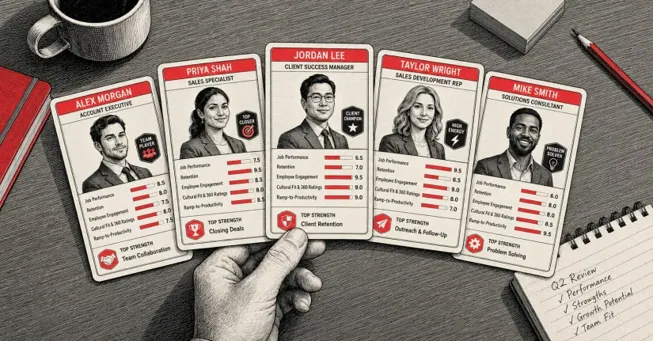
Lead with behavioral insight. Managers who understand what actually drives each person catch early signs of disengagement before they worsen. Our behavioral assessments give managers a science-backed starting point for doing exactly that.
The companies still treating burnout as a benefits problem will keep losing the people they thought they were supporting. The ones that get this right won’t start with new perks. They’ll start with the manager relationship, and the insight to make it actually work.